Summary: Case study on today's bookmaker lines, analyzing sharp money, public bias, and line movements in foo
At 9:47 AM on a crisp Saturday, the bookmaker’s board at Ladbrokes in Manchester showed Manchester City at 1.85 to win against Brighton. By 11:30, that same line had drifted to 2.10. No team news broke, no injury leaked, no manager gave a cryptic press conference. The shift came purely from the weight of money—specifically, a series of five-figure bets placed by a syndicate operating out of a betting shop in Soho. This is today’s bookmaker lines in action: a living, breathing entity that reacts to every pound wagered。every whisper of insider knowledge, and every algorithm that scans social media for sentiment.Take the recent Premier League round as a concrete case. The opening lines for the Liverpool vs. Arsenal clash had the home side at 2.40, but within three hours of release, that number dropped to 2.20. A sharp bettor I know—let’s call him Dave—watched the move from his local pub and immediately placed a large stake on Liverpool at the new price. He told me, “When the line moves that fast without news。it’s not the public. It’s the pros. They know something” Dave’s instinct paid off: Liverpool won 2-1, and the closing line had shortened further to 2.05. Today’s bookmaker lines aren’t just numbers;they’re a barometer of collective intelligence。and reading them requires understanding the difference between sharp money and recreational bets.Now, contrast that with a lower-tier match: a midweek Championship fixture between Blackburn and Hull. The bookmaker set the over/under at 2.5 goals。
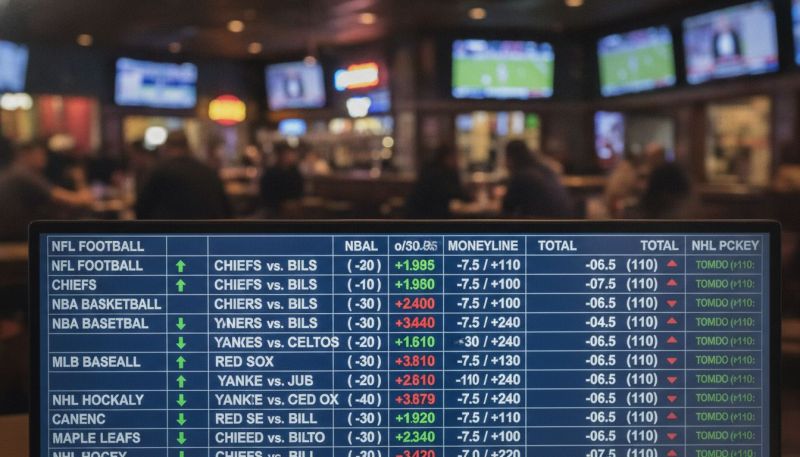
with the over priced at 1.90. No sharp action came in, but a flood of small bets from casual punters pushed the over to 1.80. The bookmaker didn’t adjust the line to 3.0;instead, they shortened the price and let the public pile in. The match ended 0-0. That’s the classic trap—today’s bookmaker lines often reflect public bias, not true probability. In my experience, the most profitable moves come when a line holds steady despite heavy public support on one side. That stubbornness signals the bookmaker’s confidence in the opposite outcome.What fascinates me most is the psychological layer beneath these movements. Yesterday, I watched a live line for a tennis match between Alcaraz and Medvedev. The bookmaker had Alcaraz at 1.50 to win the first set. As the players warmed up, the line moved to 1.55—a tiny shift, but telling. A few large bets on Medvedev came in, likely from a model that detected Alcaraz’s recent fatigue after a long tournament. The bookmaker didn’t panic;
they just adjusted the margin. This is where today’s bookmaker lines become a game within a game. The bookmakers aren’t trying to predict the outcome—they’re trying to balance their books while exploiting your biases. When you see a line move against your initial instinct。ask yourself: is this information, or is it noise?Here’s the practical takeaway, drawn from years of tracking these numbers: never bet on a line that hasn’t moved since opening. A static line in a high-profile match suggests the bookmaker is comfortable with their exposure, which usually means they’ve priced it accurately. Conversely, a line that drifts significantly—like the Man City example—offers value if you can identify the reason. I’ve found that checking the closing line against the opening line gives you a rough measure of where the smart money went. If the closing line is lower than the opening。the sharp money was on that side. Today’s bookmaker lines are a puzzle, but with careful observation, you can piece together the picture before the market fully adjusts.